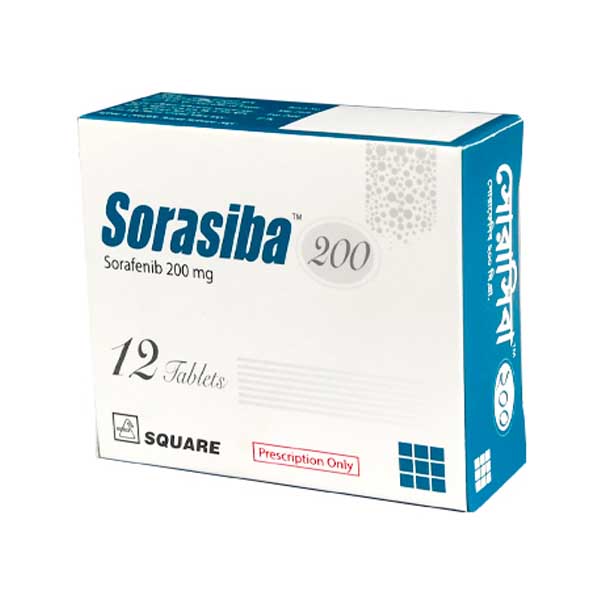
Sorasiba is indicated for the treatment of patients with unresectable hepatocellular carcinoma (HCC).

Hepatocellular Carcinoma: Sorasiba is indicated for the treatment of patients with unresectable hepatocellular carcinoma (HCC).Renal Cell Carcinoma: Sorasiba is indicated for the treatment of patients with advanced renal cell carcinoma (RCC).
Sorafenib is a kinase inhibitor that decreases tumor cell proliferation. Sorafenib was shown to inhibit multiple intracellular (CRAF, BRAF and mutant BRAF) and cell surface kinases (KIT, FLT-3, RET, VEGFR-1, VEGFR-2, VEGFR-3, and PDGFR-β). Several of these kinases are thought to be involved in tumor cell signaling, angiogenesis, and apoptosis.
Sorafenib is contraindicated in patients with known severe hypersensitivity to Sorafenib or any other component of Sorafenib. Sorafenib in combination with carboplatin and paclitaxel is contraindicated in patients with squamous cell lung cancer.
Serious adverse reactions are cardiac ischemia, infarction, hemorrhage, hypertension, hand-foot skin reaction and rash, gastrointestinal perforation, wound healing complications.
Based on its mechanism of action and findings in animals, Sorafenib may cause fetal harm when administered to a pregnant woman. Women of childbearing potential should be advised to avoid becoming pregnant while on Sorafenib. It is not known whether Sorafenib is excreted in human milk.
There is no specific treatment for Sorasiba overdose. The highest dose of Sorasiba studied clinically is 800 mg twice daily. The adverse reactions observed at this dose were primarily diarrhea and dermatologic.
Targeted Cancer Therapy
Store at room temperature below 30°C. Do not remove desiccant. Dispense in original bottle.