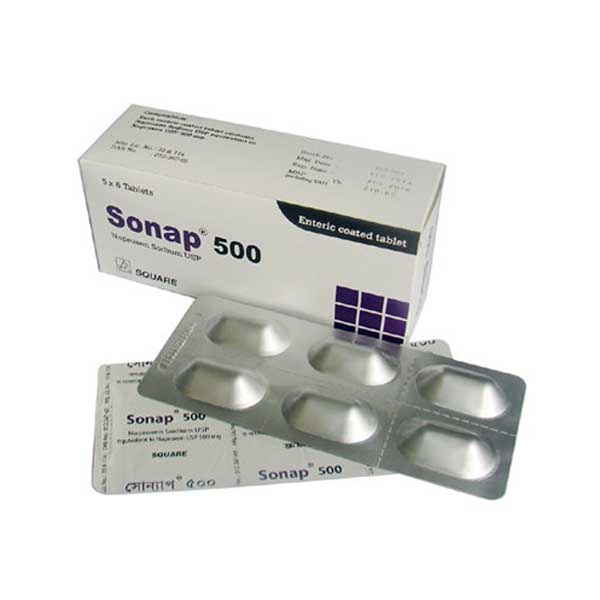
As with other non-selective NSAIDs, naproxen exerts it's clinical effects by blocking COX-1 and COX-2 enzymes leading to decreased prostaglandin synthesis.


Sonap is indicated for the relief of sign and symptoms of-
As with other non-selective NSAIDs, naproxen exerts it's clinical effects by blocking COX-1 and COX-2 enzymes leading to decreased prostaglandin synthesis. Although both enzymes contribute to prostaglandin production, they have unique functional differences.
ACE inhibitors: diminish the antihypertensive effect of ACE inhibitors.
Antacids & Sucralfate: delay the absorption of Sonap.
Aspirin: increase adverse effects.Diuretics: reduce the natriuretic effect of Furosemide and Thiazides.
Methotrexate: enhance the toxicity of Methotrexate.
Warfarin: increase the risk of GI bleeding.
Selective Serotonin Reuptake Inhibitors (SSRI): increase the risk of GI bleeding.
Naproxen is contraindicated in patients with known hypersensitivity to Naproxen. It should not be given to patients who have experienced asthma, urticaria, or allergic-type reactions after taking aspirin or other NSAIDs. It is contraindicated for the treatment of perioperative pain in the setting of coronary artery bypass graft (CABG) surgery.
Most frequently reported side effects include following:
Most non-steroidal anti-inflammatory drugs may have an adverse effect on the fetus through their pharmacological properties. Naproxen causes a delay in parturition in animals and has been associated with premature closure of the ductus arteriosus and severe pulmonary hypertension in infants born to mothers taking Naproxen.
Drugs for Osteoarthritis, Drugs used for Rheumatoid Arthritis, Non-steroidal Anti-inflammatory Drugs (NSAIDs)Storage ConditionsKeep below 30°C temperature, protected from light & moisture. Keep out of the reach of children.