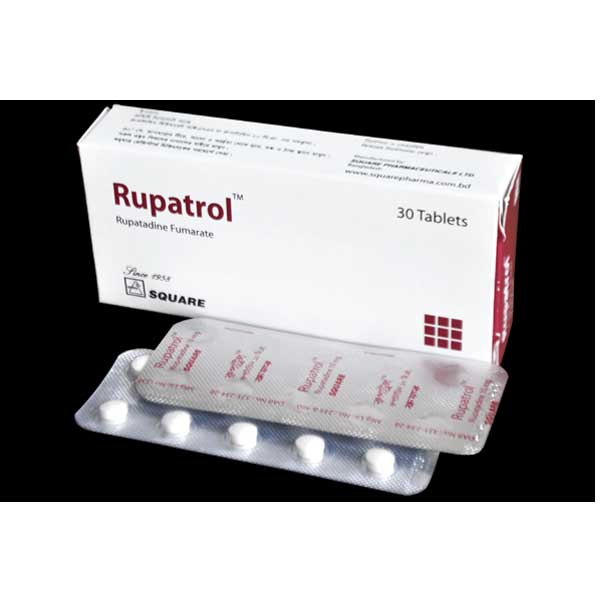
Rupatrol is indicated for the symptomatic treatment of Seasonal & Perennial Allergic Rhinitis and Urticaria.

Rupatrol is indicated for the symptomatic treatment of Seasonal & Perennial Allergic Rhinitis and Urticaria.
Rupatadine is a long-acting, non-sedative antagonist of histamine H1-receptors. It also antagonizes the platelet activating factor (PAF). Both histamine and PAF cause broncho constriction which leads to an increase in the vascular permeability and act as a mediator in the inflammatory process.
Adults and adolescents (over 12 years): The recommended dose is 10 mg once a day. Rupatadine may be taken with or without food.
Children aged 2 to 11 years:
With medicine: The concomitant administration of Rupatrol 20 mg and ketoconazole or erythromycin increases the systemic exposure. Rupatrol should be used with caution when it is administered concomitantly with these drug substances and other inhibitors of the isozyme CYP3A4.
With food: Grapefruit and Grapefruit juice should not be taken simultaneously with Rupatadine
Hypersensitivity to Rupatadine or to any of the excipients.
Common: Asthenia, dizziness, drowsiness. Uncommon: Appetite increased, arthralgia, back pain, concentration impaired, constipation, cough, diarrhea, dry throat, epistaxis, fever, gastrointestinal discomfort, increased risk of infection, irritability, malaise, myalgia, nasal dryness, nausea, oropharyngeal pain, rash, thirst, vomiting, weight increased. Rare: Palpitations, tachycardia.
There is no clinical data available on the exposure of Rupatadine during pregnancy. Pregnant women should therefore not use Rupatadine unless the potential benefit outweighs the potential risk for the infant.
Rupatrol should be used with caution in patients with known prolongation of the QT interval, patients with uncorrected hypokalemia, and patients with ongoing proarrhythmic conditions, such as clinically significant bradycardia or acute myocardial ischemia.
Elderly: Rupatrol should be used with caution in elderly. No information is available that indicates the requirement of any dose adjustment in this population.
Children: Neither the safety nor the efficacy of Rupatrol has been established in patients less than 12 years of age.
Patients with renal or hepatic insufficiency: Use of Rupatrol is not recommended in patients with renal or hepatic insufficiency. As no relevant clinical data is available.
The most common adverse reaction was somnolence. If accidental ingestion of very high doses occurs, symptomatic treatment together with the required supportive measures should be given.
Non-sedating antihistamines
Store in cool & dry place below 30°C, protect from light & moisture. Keep out of reach of children.