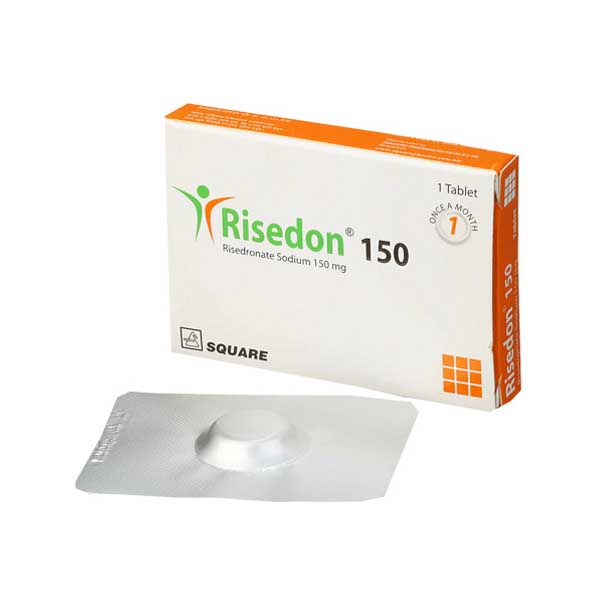
Risedronate Sodium tablet is contraindicated in patients with known hypersensitivity to Risedronate Sodium and in patients with hypocalcaemia, severe renal impairment (creatinine clearance lower than 30 ml/min), during pregnancy and lactation.


This is in a group of medicines called bisphosphonates. It alters the cycle of bone formation and breakdown in the body. It slows bone loss while increasing bone mass, which may prevent bone fractures. Risedon is a prescription medicine used:
Your body is constantly breaking down old bone and making new bone tissue. If you have osteoporosis, your body breaks down more bone than it forms so gradually bone loss occurs and your bones become thinner and fragile. This is especially common in women after menopause (change of life).
Treatment of postmenopausal osteoporosis, to reduce the risk of vertebral fractures. Treatment of established postmenopausal osteoporosis, to reduce the risk of hip fractures: The recommended dose is Risedronate Sodium 5 mg once daily or Risedronate Sodium 35 mg once weekly on the same day each week or Risedronate Sodium 150 mg once monthly.
Prevention of osteoporosis in postmenopausal women with increased risk of osteoporosis: The recommended dose is Risedronate Sodium 5 mg once daily.
Please tell your doctor if you are taking or have recently taken any other medicines, including medicines obtained without a prescription specially aspirin or other NSAIDs. Antacids, supplements, or medicines that contain aluminum, calcium, magnesium, or other minerals can interfere with how your body absorbs Risedon.
Risedronate Sodium tablet is contraindicated in patients with known hypersensitivity to Risedronate Sodium and in patients with hypocalcaemia, severe renal impairment (creatinine clearance lower than 30 ml/min), during pregnancy and lactation.
Serious side effects:
Risedronate Sodium is meant for use only in postmenopausal women. Therefore, Risedronate Sodium should not be taken during pregnancy. If you take it by accident during pregnancy, stop taking it straight away and talk to your doctor.
Bisphosphonate preparations
Store in a cool and dry place. Protect from light & moisture. Keep out of the reach of children.