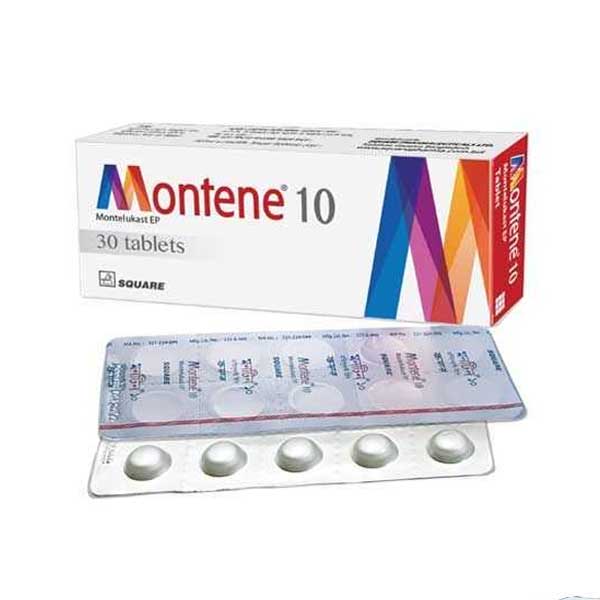
Montene has been administered with other therapies routinely used in the prophylaxis and chronic treatment of asthma with no apparent increase in adverse reactions.

Montene is indicated for:
Prophylaxis and chronic treatment of asthmaAcute prevention of Exercise-Induced Bronchoconstriction (EIB)Relief of symptoms of Allergic Rhinitis (AR): Seasonal & Perennial Allergic Rhinitis
Montelukast is a selective and orally active leukotriene receptor antagonist that inhibits the cysteinyl leukotriene receptor (CysLT1). The cysteinyl leukotrienes (LTC4, LTD4, LTE4) are products of arachidonic acid metabolism and are released from various cells, including mast cells and eosinophils. Cysteinyl leukotrienes and leukotriene receptor occupation have been correlated with the pathophysiology of asthma & allergic rhinitis, including airway edema, smooth muscle contraction, and altered cellular activity associated with the inflammatory process, which contribute to the signs and symptoms of asthma.
Montene has been administered with other therapies routinely used in the prophylaxis and chronic treatment of asthma with no apparent increase in adverse reactions. In drug interaction studies, the recommended clinical dose of Montene did not have clinically important effects on the pharmacokinetics of the following drugs: theophylline, prednisone, prednisolone, oral contraceptives (norethindrone 1mg/ethinyl estradiol 35mcg), terfenadine, digoxin, and warfarin.
Montelukast is contraindicated in patients who are hypersensitive to any component of this product.
Common: Diarrhoea, fever, gastrointestinal discomfort, headache, nausea, vomiting, skin reactions, upper respiratory tract infection.
Uncommon: Akathisia, anxiety, arthralgia, asthenia, abnormal behavior, depression, dizziness, drowsiness, dry mouth, haemorrhage, irritability, malaise, muscle complaints, oedema, seizure, abnormal sensation, sleep disorders.
Rare: Angioedema, concentration impaired, disorientation, eosinophilic granulomatosis with polyangiitis, erythema nodosum, hallucination, hepatic disorders, memory loss, palpitations, pulmonary eosinophilia, suicidal tendencies, tremor.
Montelukast crosses the placenta following oral dosing in rats and rabbits. There are, however, no adequate and well-controlled studies in pregnant women. Because animal reproduction studies are not always predictive of human response, Montelukast should be used during pregnancy only if clearly needed. Because many drugs are excreted in human milk, caution should be exercised when Montelukast is given to a nursing mother.
Montene is not indicated for use in the reversal of bronchospasm in acute asthma attacks, including status asthmaticus. Patients should be advised to have appropriate rescue medication available. Therapy with Montene can be continued during acute exacerbations of asthma.
There were no adverse experiences in the majority of overdosage reports. The most frequently occurring adverse experiences were consistent with the safety profile of Montene and included abdominal pain, somnolence, thirst, headache, vomiting and psychomotor hyperactivity. In the event of overdose, it is reasonable to employ the usual supportive measures; e.g., remove unabsorbed material from the gastrointestinal tract, employ clinical monitoring, and institute supportive therapy, if required.
Leukotriene receptor antagonists
Store in cool & dry place below 30°C, protect from light & moisture. Keep out of reach of children.