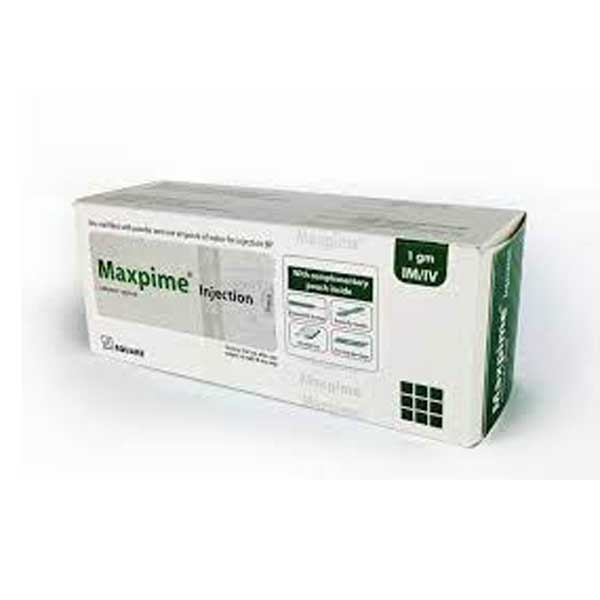
Cephalosporins are bactericidal and have the same mode of action as other beta-lactam antibiotics (such as penicillins).

PharmacologyCephalosporins are bactericidal and have the same mode of action as other beta-lactam antibiotics (such as penicillins). Cephalosporins disrupt the synthesis of the peptidoglycan layer of bacterial cell walls. The peptidoglycan layer is important for cell wall structural integrity, especially in Gram-positive organisms. The final transpeptidation step in the synthesis of the peptidoglycan is facilitated by transpeptidases known as penicillin binding proteins (PBPs).
Renal function should be monitored carefully if high doses of aminoglycosides are to be administered with Maxpime because of the increased potential of nephrotoxicity and ototoxicity of aminoglycoside antibiotics. Nephrotoxicity has been reported following concomitant administration of other cephalosporins with potent diuretics such as furosemide.
Cefepime is contraindicated in patients who have shown immediate hypersensitivity reactions to cefepime or the cephalosporin class of antibiotics, penicillin, or other betalactum antibiotics.
Maxpime is contraindicated in patients who have shown immediate hypersensitivity reactions to cefepime or the cephalosporin class of antibiotics, penicillin, or other betalactum antibiotics.
Pregnancy Category B. There are, however, no adequate and well-controlled studies of cefepime use in pregnant women. Because animal reproduction studies are not always predictive of human response, this drug should be used during pregnancy only if clearly needed. Cefepime is excreted in human breast milk in very low concentrations (0.5 pg/ml). Caution should be exercised when cefepime is administered to a nursing woman.
Patients who receive an overdose should be carefully observed and given supportive treatment. In the presence of renal insufficiency, hemodialysis, not peritoneal dialysis, is recommended to aid the removal of cefepime from the body. Accidental overdosing has occurred when large doses were given to patients with impaired renal function. Symptoms of overdose include encephalopathy (disturbance of consciousness including confusion, hallucinations, stupor, and coma), myoclonus, seizures, and neuromuscular excitability.
Fourth generation Cephalosporins
Do not use later than the date of expiry. Keep all medicines out of the reach of children. To be dispensed only on the prescription of a registered physician.