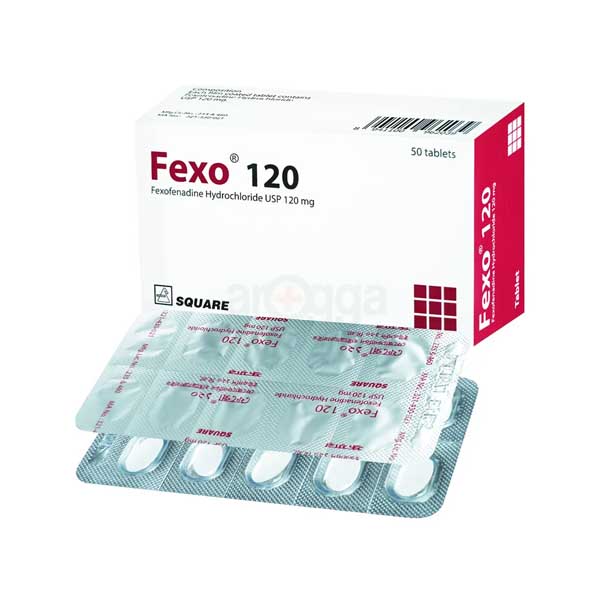
Fexo is indicated for the relief of symptoms associated with seasonal and perennial allergic rhinitis, in adults and children 12 years of age and over.
Fexo is indicated for the relief of symptoms associated with seasonal and perennial allergic rhinitis, in adults and children 12 years of age and over. Symptoms treated effectively include sneezing, rhinorrhea, lacrimation, itchy, red eyes and itchy nose/palate/throat.
The H1 histamine receptor is responsible for mediating hypersensitivity and allergic reactions. Exposure to allergen results in the degranulation of mast cells and basophils, which then release histamine and other inflammatory mediators.
Fexo does not undergo hepatic biotransformation and therefore will not interact with other medicinal products through hepatic mechanisms. Coadministration of Fexo with erythromycin or ketoconazole has been found to result in a 2-3 times increase in the level of fexofenadine in plasma.
Contraindicated in patients with known hypersensitivity to Fexofenadine Hydrochloride or any of its ingredients.
The following frequency rating has been used, when applicable: Very common ≥1/10; Common ≥1/100 and <1/10; Uncommon ≥1/1,000 and <1/100; Rare ≥1/10,000 and <1/1,000; Very rare <1/10,000 and not known (frequency cannot be estimated from the available data).
There are no adequate data from the use of Fexofenadine hydrochloride in pregnant women. Limited animal studies do not indicate direct or indirect harmful effects with respect to effects on pregnancy, embryonal/foetal development, parturition or postnatal development.
As with most new medicinal products there is only limited data in the older people and renally or hepatically impaired patients. Fexo should be administered with care in these special groups.
Dizziness, drowsiness, fatigue and dry mouth have been reported with overdose of Fexo. Single doses up to 800 mg and doses up to 690 mg twice daily for 1 month or 240 mg once daily for 1 year have been administered to healthy subjects without the development of clinically significant adverse reactions as compared with placebo.
Non-sedating antihistamines
Keep in a dry place away from light and heat. Keep out of the reach of children. Chemical Structure