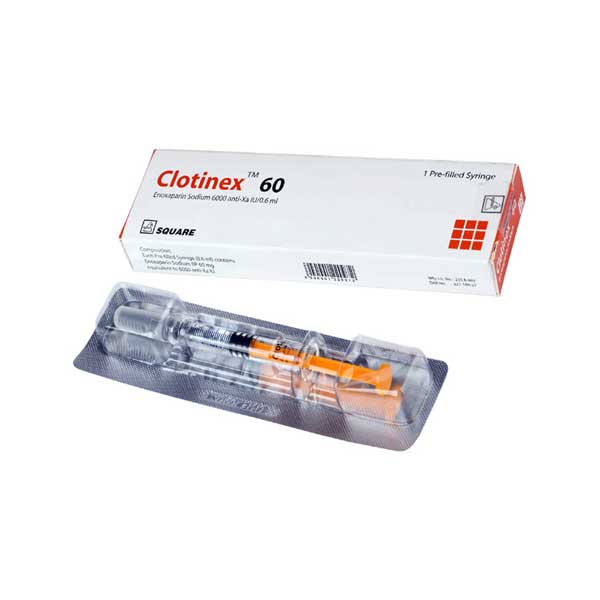
Enoxaparin Sodium is a low molecular weight heparin with a high anti-Xa activity and low anti-lla or antithrombin activity.

Clotinex is indicated in:
Enoxaparin Sodium is a low molecular weight heparin with a high anti-Xa activity and low anti-lla or antithrombin activity. At doses required for the various indications, Enoxaparin Sodium does not increase bleeding time. At preventive doses, Enoxaparin Sodium causes no notable modification of activated Partial Thromboplastin Time (aPTT). It neither influences platelet aggregation nor binding of fibrinogen to platelets. Enoxaparin Sodium is primarily metabolised in the liver.
It is recommended that agents which affect hemostasis should be discontinued prior to Clotinex therapy unless strictly indicated. These agents include medications such as: acetylsalicylic acid (and derivatives), NSAIDs (including ketorolac), ticlopidine,clopidogrel,dextran 40,glucocorticoids, thrombolytics and anticoagulants, other antiplatelet aggregation agents including glycoprotein llb/llla antagonists. If the combination is indicated, should be used with careful clinical and laboratory monitoring.
Patients with known hypersensitivity to Enoxaparin Sodium, heparin or other low molecular weight heparins. Patients with active major bleeding and conditions with a high risk of uncontrolled hemorrhage including recent hemorrhagic stroke.
Haemorrhage (bleeding), Thrombocytopenia, elevations of serum aminotransferase. Pain, bluish marks at injection sites to skin rash at injection sites. Cases of neuraxial hematomas with the concurrent use of Clotinex and spinal/epidural anesthesia or spinal puncture have resulted in varying degrees of neurologic injuries.
Pregnancy category B. In humans, there is no evidence that Enoxaparin Sodium crosses the placental barrier. As there are no adequate and well-controlled studies in pregnant women, Enoxaparin Sodium should be used during pregnancy only if clearly needed. Pregnant women with mechanical prosthetic heart valves may be at a higher risk for thromboembolism.
Clotinex should be injected by deep subcutaneous route in prophylactic and curative treatment and by intravascular route during hemodialysis.
Accidental overdosage following administration of Clotinex may lead to hemorrhagic complications. Injected Clotinex may be largely neutralized by the slow i.v. injection of protamine sulfate (1% solution) The dose of protamine sulfate should be equal to the dose of Clotinex injected: 1 mg protamine sulfate should be administered to neutralize 1 mg Clotinex.
Parenteral anti-coagulants
Store in a cool and dry place, protect from light and moisture. Do not store above 25°C. Do not store in a refrigerator or freezer. Keep out of the reach of children