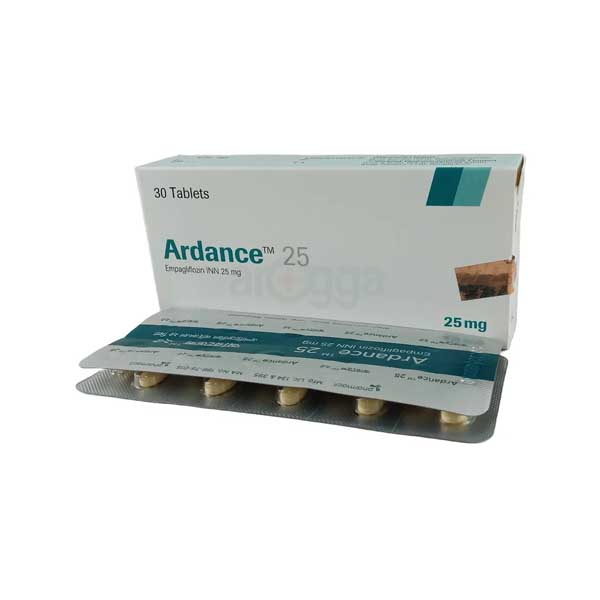
Empagliflozin is a sodium glucose co-transporter-2 (SGLT-2) inhibitor.

The recommended dose of Empagliflozin is 10 mg once daily, taken in the morning, with or without food. In patients tolerating Empagliflozin, the dose may be increased to 25 mg once daily.
Empagliflozin is contraindicated in patients with history of serious hypersensitivity reaction to Empagliflozin or any of its ingredients, severe renal impairment, end-stage renal disease, or dialysis.
The most common adverse reactions associated with Ardance are urinary tract infections and female genital mycotic infections. Others common side effects includes dehydration, hypotension, weakness, dizziness and increased thirstiness.
There are no adequate and well-controlled studies of Empagliflozin in pregnant women. Empagliflozin should be used during pregnancy only if the potential benefit justifies the potential risk to the fetus. It is not known if Empagliflozin is excreted in human milk.
Assessment of renal function is recommended prior to initiation of Ardance and periodically thereafter.
In the event of an overdose with Ardance the usual supportive measures (e.g., remove unabsorbed material from the gastrointestinal tract, perform clinical monitoring, and institute supportive treatment) should be employed. Removal of Ardance by hemodialysis has not been studied.
Sodium-glucose Cotransporter-2 (SGLT2) Inhibitors
Keep in a cool & dry place (below 30° C), protected from light & moisture. Keep out of the reach of children.