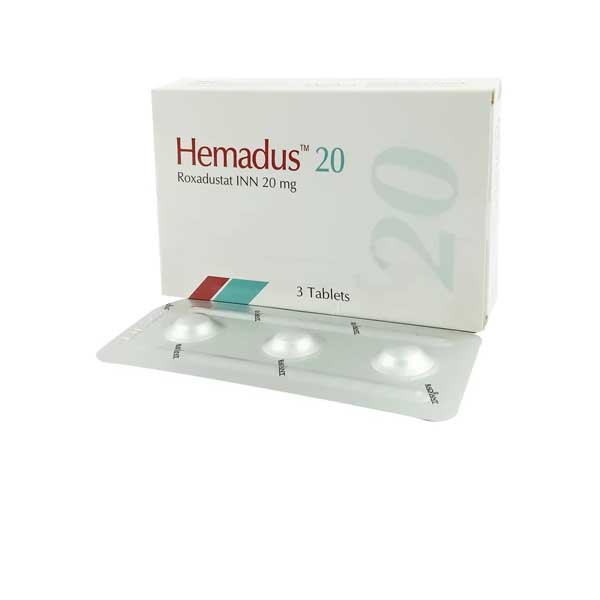
Hemadus in combination with other medications may have drug-drug interaction.
Hemadus is a frst-in-class, orally administered HIF-PH inhibitor that promotes erythropoiesis through increasing endogenous production of erythropoietin, as well as improving iron regulation and overcoming the EPO-suppressive efects of infammation on hemoglobin syntheses and red blood cell production by downregulating hepcidin.
Roxadustat is an orally bioavailable, hypoxia-inducible factor prolyl hydroxylase inhibitor (HIF-PHI), with potential anti-anemic activity. Upon administration, roxadustat binds to and inhibits HIF-PH, an enzyme responsible for the degradation of transcription factors in the HIF family under normal oxygen conditions. This prevents HIF breakdown and promotes HIF activity. Increased HIF activity leads to an increase in endogenous erythropoietin production, thereby enhancing erythropoiesis.
Hemadus in combination with other medications may have drug-drug interaction.
Hemadus with Phosphate binders and other products containing multivalent cation (EXCEPT) lanthanum carbonate: Risk: decreased Hemadus AUC by 67% and 46% and Cmax by 66% and 52% Recommendation: Hemadus should be taken at least 1 hour after administration of phosphate binders or other medicinal products or supplements containing multivalent cations.
The common adverse reactions associated with Hemadus are hypertension, vascular access thrombosis, diarrhoea, peripheral oedema, hyperkalaemia and nausea.
Overdose EffectsSymptoms: When Hemadus was administered 5 mg/kg (510 mg) to a single healthy adult, increased heart rate transient have been reported. Hemoglobin concentration by overdosage of Hemadus is likely to increase more than necessary.